

Something significant just happened in women's flag football — and most people haven't noticed yet.
For the 2026-27 academic year, 21 conferences across four governing bodies will sponsor women's flag football. Nearly 400 club and varsity teams will compete at the college level. The sport now has representation at every tier of collegiate athletics — NCAA Division I, Division II, Division III, NAIA, and NJCAA.
This is not a trend. This is infrastructure. And for the female flag football player in high school right now, it means something very real: there is a college program out there for you.

How We Got Here
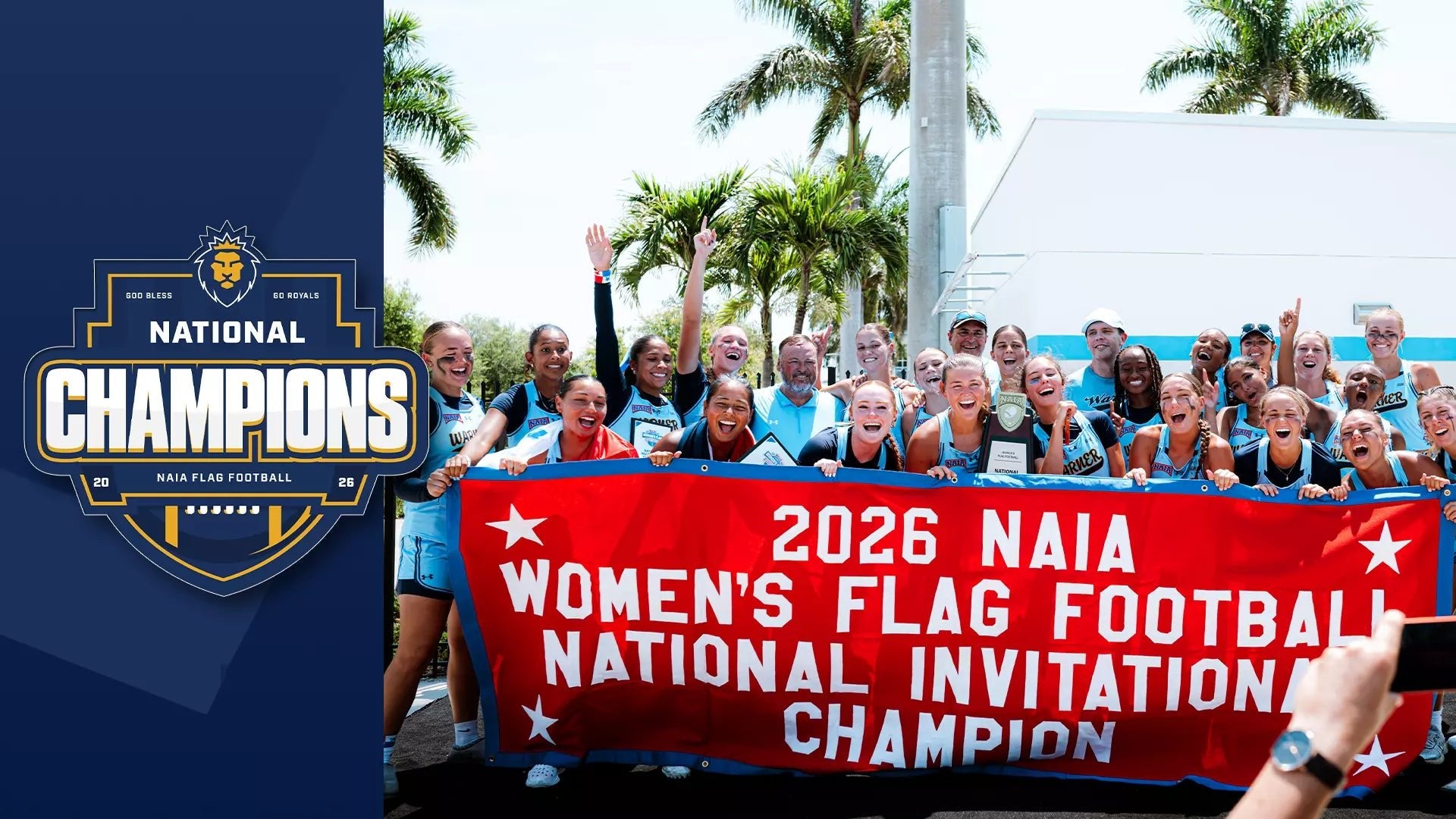
The NAIA was first. Women's flag football began as an emerging sport in the NAIA in 2021 — five years ago, when most people hadn't heard of women's flag football at all. A small group of programs took a chance on the sport. They built something.
In 2023, the NJCAA added flag football, opening the door for junior college programs and creating a new pathway for athletes who needed a stepping stone before a four-year university.
Then in January 2026, the NCAA officially added women's flag football to its Emerging Sports for Women program. That single decision accelerated everything. Dozens of NCAA schools launched programs. Conferences began sponsoring. The Mid-Eastern Athletic Conference — an HBCU conference at the Division I level — became the first NCAA Division I conference to sponsor women's flag football, with a championship planned for 2027.
For the 2026-27 season, the NAIA elevated flag football to a full championship sport after five years as an emerging sport. That's the full journey: emerging sport to championship sport in five years. That's fast.
The 21 Conferences Competing in 2027
Here is every conference scheduled to compete in the spring 2027 season:
| Conference | Governing Body |
|---|---|
| Mid-Eastern Athletic Conference (MEAC) | NCAA Division I |
| Central Atlantic Collegiate Conference | NCAA Division II |
| Central Intercollegiate Athletic Conference | NCAA Division II |
| Conference Carolinas | NCAA Division II |
| Great Lakes Intercollegiate Athletic Conference | NCAA Division II |
| Southern Intercollegiate Athletic Conference | NCAA Division II |
| American Southwest Conference | NCAA Division III |
| Atlantic East Conference | NCAA Division III |
| Eastern College Athletic Conference | NCAA D-I/II/III |
| Empire 8 | NCAA Division III |
| Northern Athletics Collegiate Conference | NCAA Division III |
| Southern Collegiate Athletic Conference | NCAA Division III |
| United East Conference | NCAA Division III |
| Great Southwest Athletic Conference | NAIA |
| Heart of America Athletic Conference | NAIA |
| Kansas Collegiate Athletic Conference | NAIA |
| Southern States Athletic Conference | NAIA |
| Sun Conference | NAIA |
| Alabama Community College Conference | NJCAA |
| Florida College System Activities Association | NJCAA |
| Orange Empire Conference | 3C2A (California) |
That's 1 Division I conference, 5 Division II conferences, 7 Division III conferences, 5 NAIA conferences, 2 NJCAA conferences, and 1 California community college conference. The sport now spans the entire geographic and competitive landscape of American collegiate athletics.

What This Means for High School Athletes
If you are a high school flag football player right now, this is the landscape you are recruiting into. It is not the landscape from two years ago. It is not the landscape from five years ago. It is new, and it is bigger than most athletes realize.
A few things worth understanding:
There are options at every level. Whether you are an elite athlete looking at Division I or a player who loves the game and wants to keep playing through college, there is a program for you. NJCAA programs are particularly underrated — they offer a genuine pathway for athletes who want college playing experience before moving to a four-year school.
The NAIA is the most established pipeline. With programs competing since 2021 and now elevated to championship sport status, NAIA programs have more experience developing flag football athletes than anyone. If you want to play at a level with real institutional commitment and competitive championships, start here.
Division III is the fastest-growing tier. Seven Division III conferences are competing in 2027. These programs combine real competitive football with schools that prioritize academics. Division III doesn't offer athletic scholarships, but many offer strong financial aid packages that make attendance affordable.
Division I is just getting started. The MEAC is the first, but it won't be the last. Division I programs are coming. The athletes who establish themselves in NAIA, NJCAA, and Division II and III programs now are building the foundation that D1 coaches will be recruiting from in 2028 and beyond.
The Power Four Is Coming
In January 2026, the University of Nebraska became the first Big Ten school — and the first Power Four program — to add varsity women's flag football. Their inaugural season begins in January 2028, right as flag football debuts at the Los Angeles Olympics.
Big Ten leadership has publicly stated they want to be a leader in this space. Nebraska's Athletic Director anticipates flag football will become an officially sponsored Big Ten championship sport within a few years. When the Big Ten moves, other Power Four conferences follow.
This is not a small development. The Big Ten is one of the most powerful conferences in college athletics. Their entry into women's flag football signals that the sport has crossed from emerging to established — and that the recruiting landscape is about to get significantly more competitive.
The First NCAA National Championship: Spring 2028
The NCAA has formally recommended that flag football become an official championship sport. If all three NCAA divisions sponsor and pass the necessary legislation, the very first NCAA National Collegiate Flag Football Championship will be held in Spring 2028 — the same year flag football debuts at the Olympics in Los Angeles.
Think about what that means: in 2028, there will be an Olympic flag football tournament in Los Angeles and an NCAA National Championship for the sport in the same calendar year. That is a level of institutional recognition that changes everything — recruiting timelines, scholarship availability, media coverage, and the long-term viability of the sport as a collegiate career path.
The athletes competing at the club and varsity level right now are the ones who will compete for those first NCAA championship rosters. The window to be part of history is open.

The 2028 Olympic Connection
Flag football will debut at the 2028 Los Angeles Olympics. The college programs launching right now are not just building teams — they are building the pipeline to the national team. The athletes who play at the college level in 2026 and 2027 are the ones who will be in contention for Olympic rosters.
College coaches know this. National team selectors know this. The sport is being built with the Olympics in mind at every level.
If you are a high school athlete reading this, you are at the right place at the right time. The infrastructure exists. The programs are launching. The opportunities are real.

How to Start Your College Recruiting Process
If you are ready to start, here is where to begin:
- Build your highlight video. Your first five clips should each show a different athletic skill — speed, change of direction, explosiveness, hand-eye coordination, football IQ. Clips from multiple opponents. Best clips first.
- Reach out proactively. DM coaches on social media. Email them directly. Fill out the recruit questionnaire on every program's website. Coaches are building first-ever rosters — the athlete who reaches out has a real advantage.
- Know your numbers. Have your transcript, cumulative GPA, and standardized test scores ready. Be honest about your measurables. Scholarship money often comes as a combination of athletic and academic aid.
- Talk to a lot of coaches. Recruiting isn't an exact science. You can't control how a program evaluates prospects or how many athletes they're taking at your position. Cast a wide net. Go where you're wanted.
For a complete step-by-step recruiting guide, read our full breakdown: How to Get a Flag Football Scholarship.
Flag-Up was built for the female flag football athlete before any of this was obvious. The gear, the content, and the community are here to support her — on the field and in the recruiting process.
Shop game-ready gear — built exclusively for the female flag football athlete.
Her Game. Her Gear.
Raise your Flag-Up.

Leave a comment
All comments are moderated before being published.
This site is protected by hCaptcha and the hCaptcha Privacy Policy and Terms of Service apply.