

The email from a college program lands in your inbox. The camp invite shows up on Instagram. The showcase flyer gets passed around your team group chat. You sign up — and then you ask yourself: What do I actually do when I get there?
Flag football recruiting camps are growing fast. More programs, more coaches, more athletes all competing for the same looks. Getting invited is step one. Getting noticed is the whole game.
This post covers exactly what to bring, what to wear, and how to show up in a way that sticks — whether it’s your first camp or your fifth.
Why Recruiting Camps Matter More Than Ever
College flag football is still young enough that there’s no single national recruiting pipeline. There’s no standard signing period, no universal portal, no clearinghouse that every program uses. Right now, a lot of recruiting happens through direct relationships — and camps are where those relationships start.
Coaches use camps to see athletes in person, evaluate movement and football IQ together, and gauge coachability in real time. Film can show speed. Film can show hands. Film cannot show how you respond when a coach corrects your route, how you compete when you’re tired, or how you treat the other athletes around you. Camps show all of that.
If you’re a girl trying to get recruited in flag football, this window matters especially. The sport’s growth at the college level is creating genuine opportunity — but the athletes who land spots early are the ones coaches already know. Camps are how you get known.
What to Wear: Gear That Works for You, Not Against You
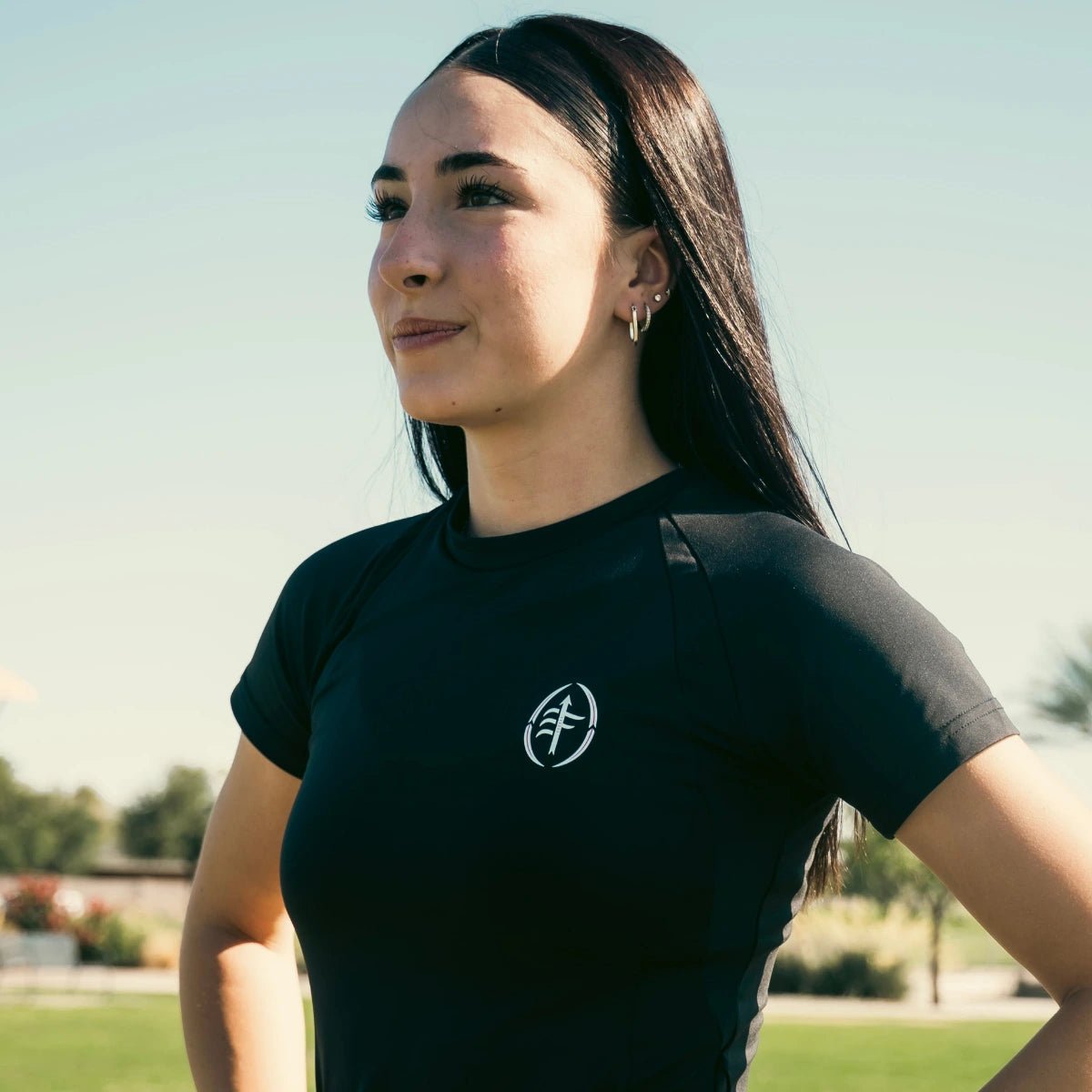
Your gear makes an impression before you run your first route. Coaches are watching everything — including how athletes carry themselves and whether they look like they take the game seriously. That doesn’t mean you need to spend a fortune. It means showing up looking like you belong.
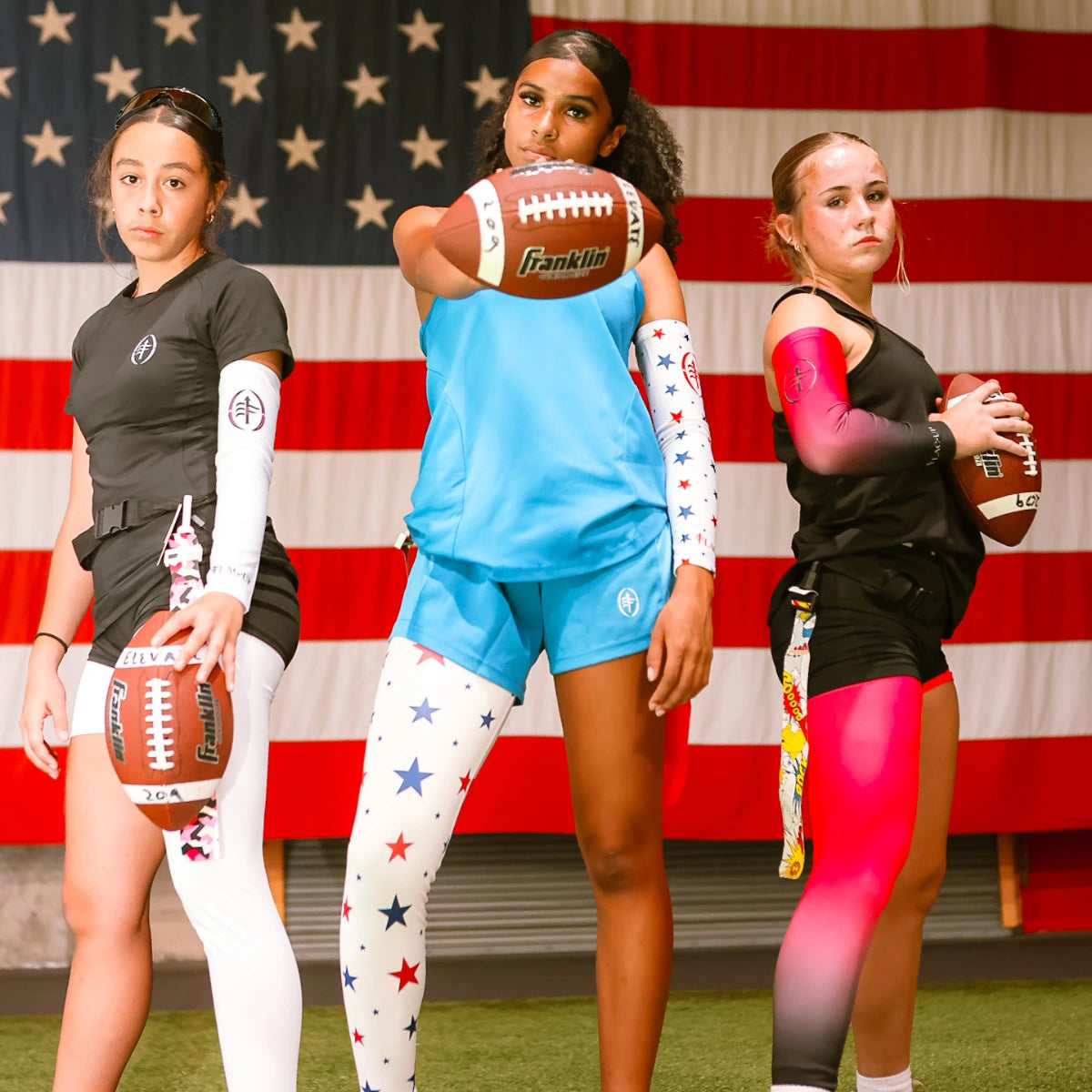
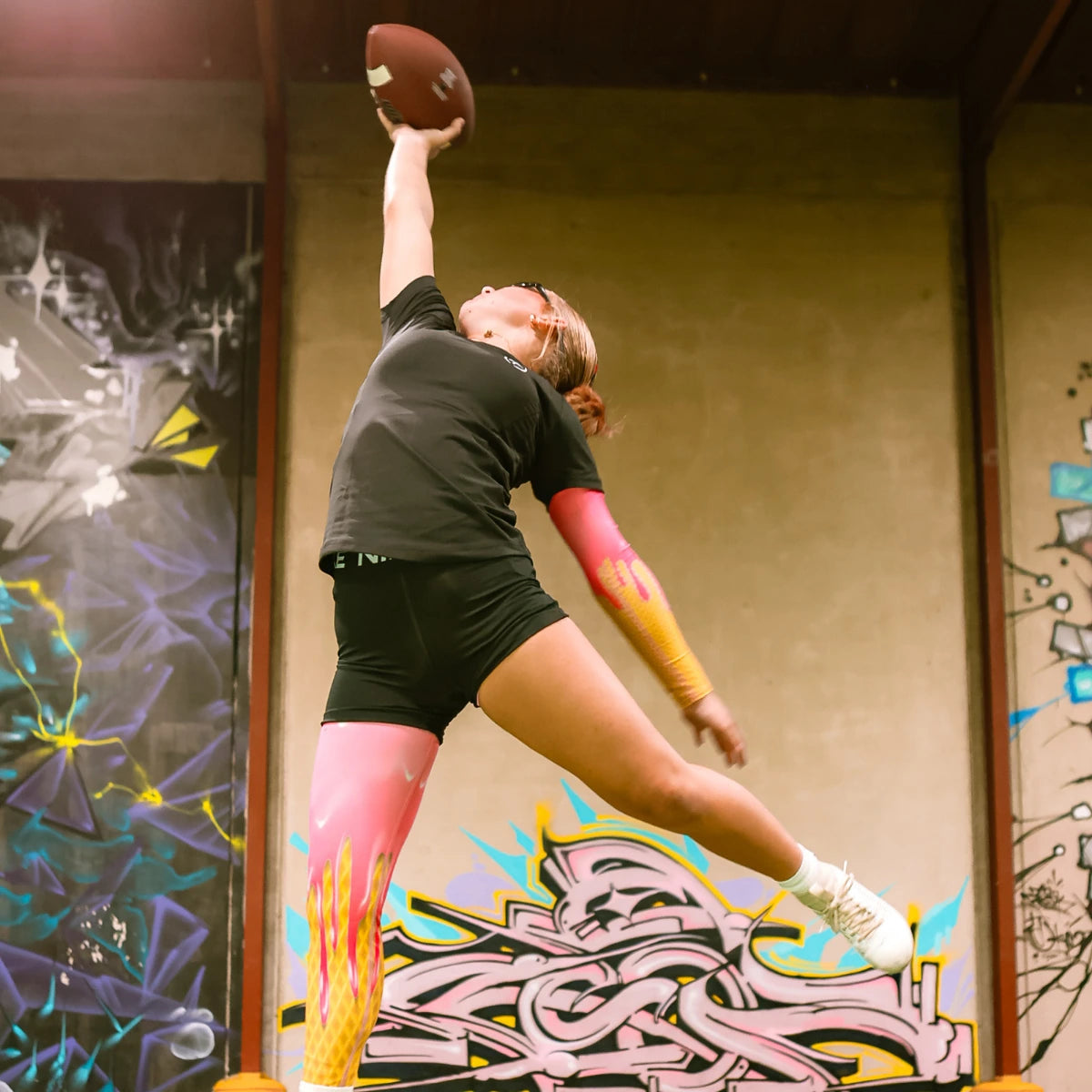
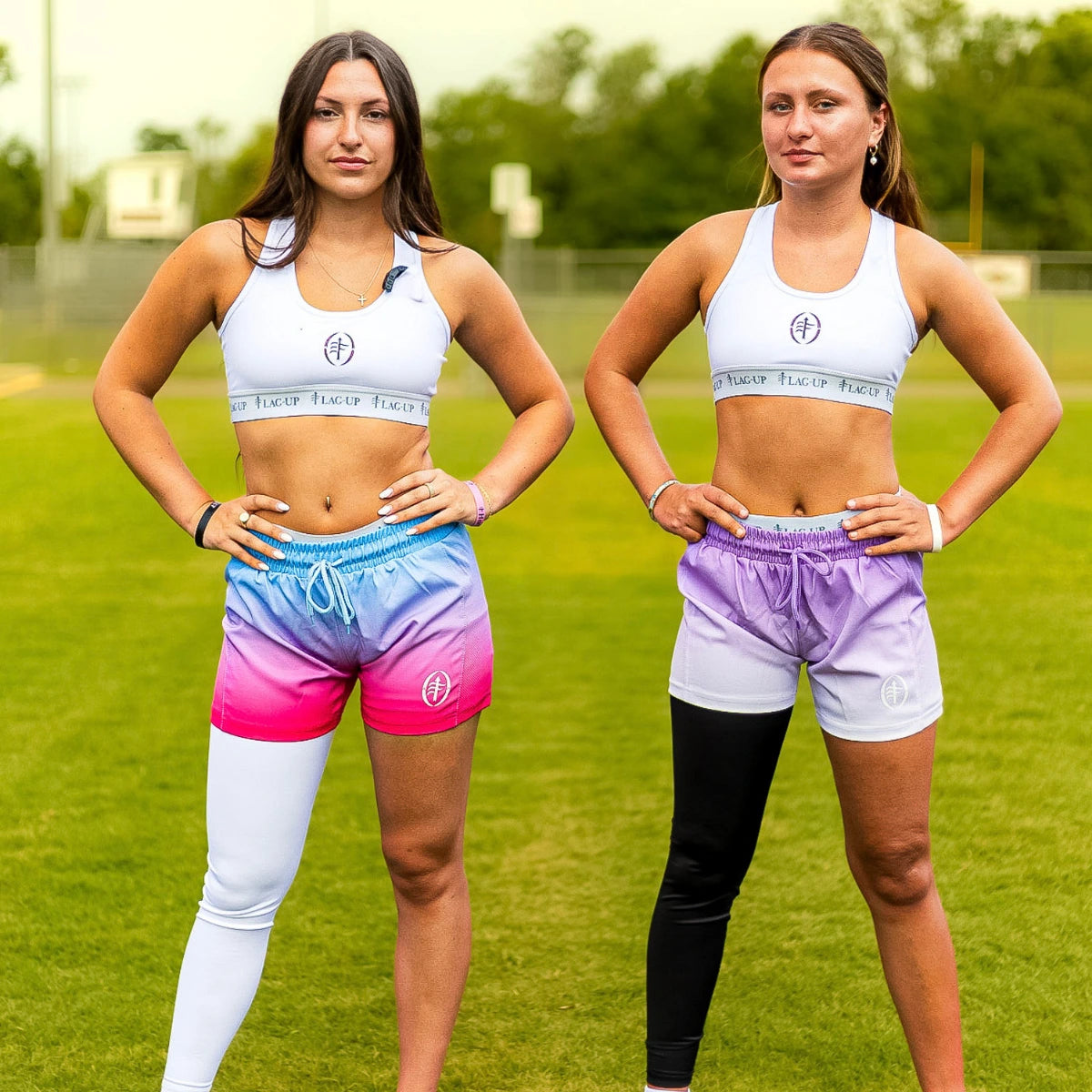
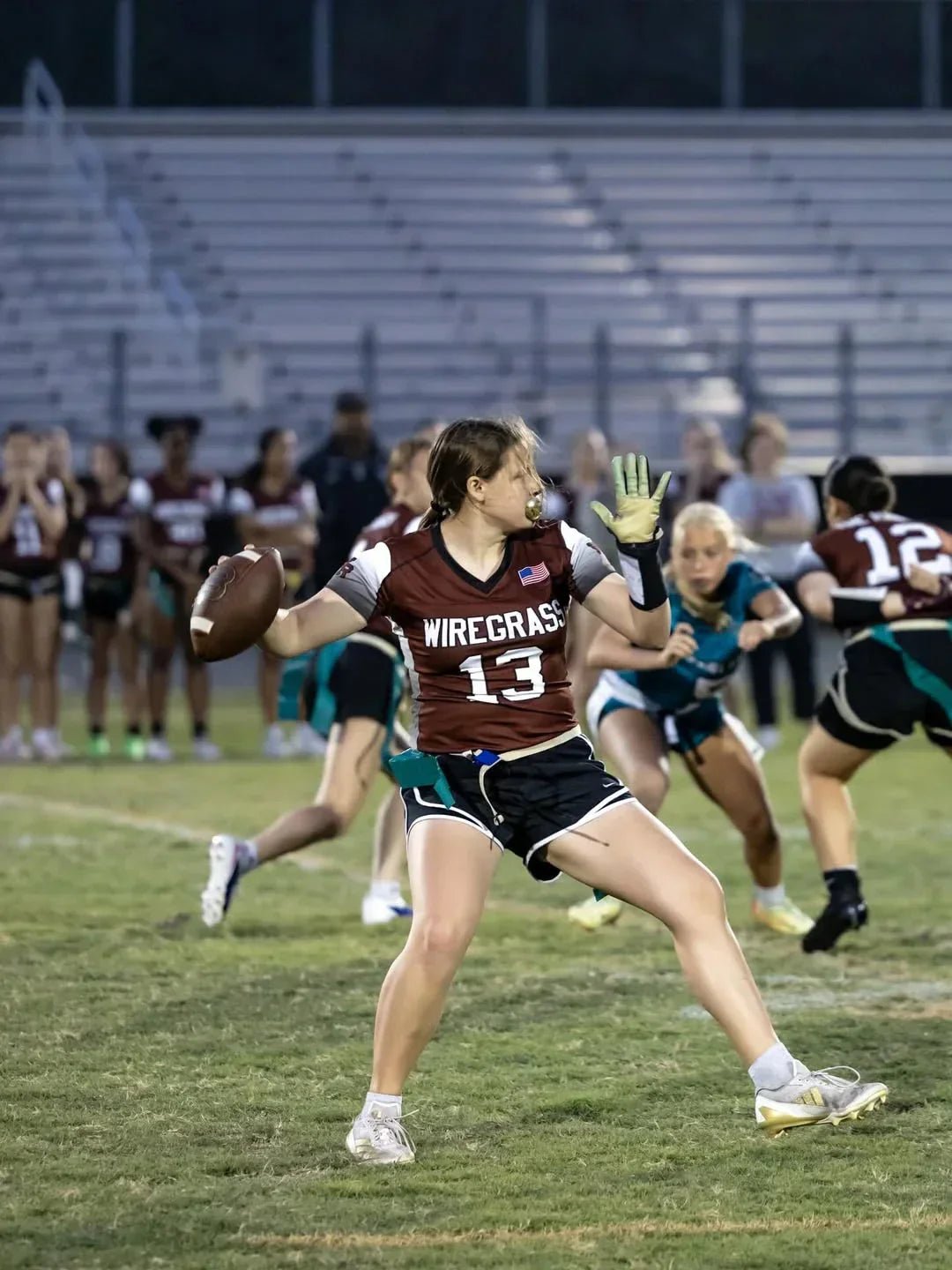
There’s another reason gear matters at a camp that nobody talks about: coaches use it to identify athletes. When there are 50 girls on a field, coaches aren’t always catching names in real time. They’re remembering the kid in the pink compression pants, or the one with the green cleats, or the girl with the matching arm sleeves. Distinctive gear makes you easier to track, easier to remember, and easier to find when a coach wants to pull you aside after a drill. That’s not vanity — it’s strategy.
Here’s what to wear to a flag football recruiting camp:
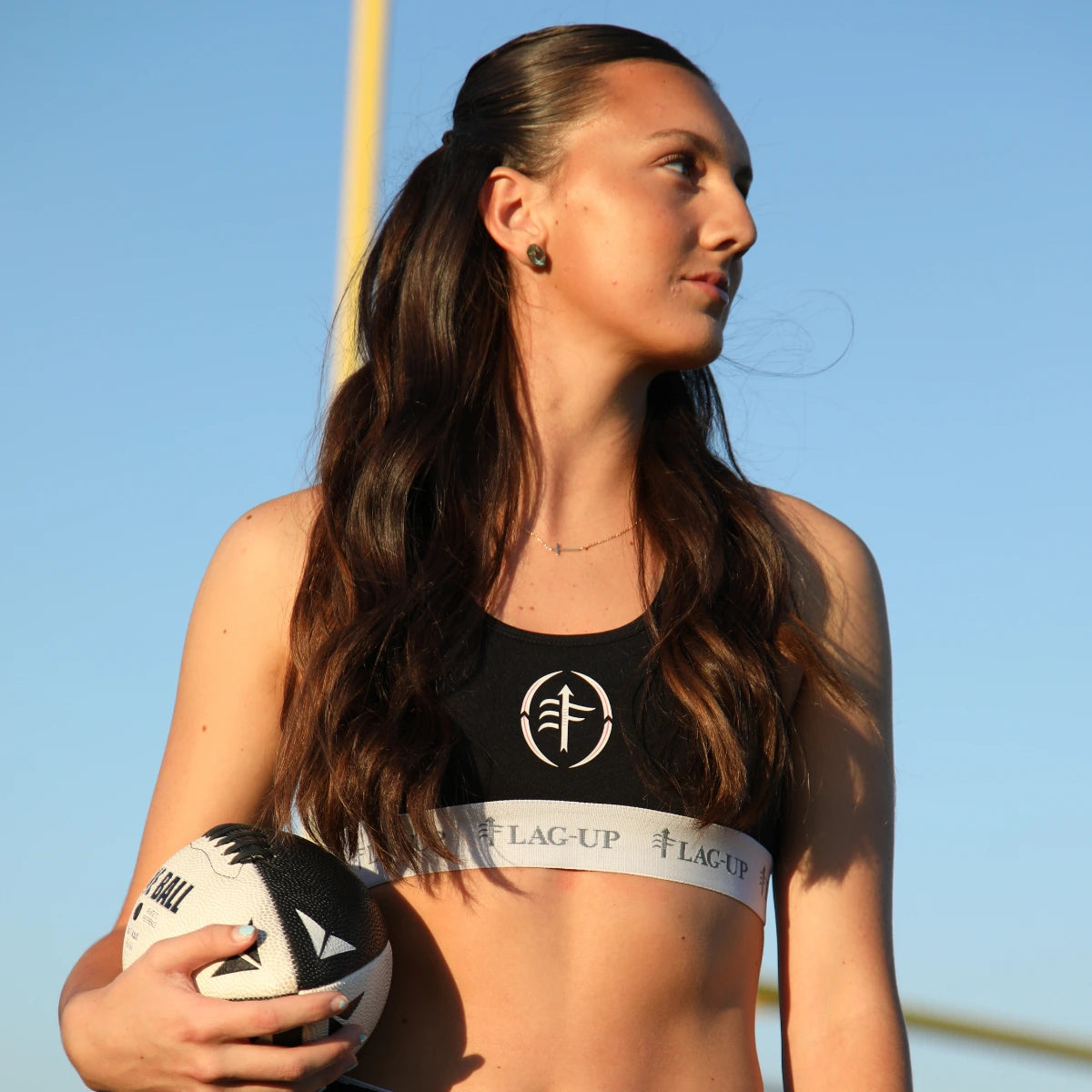
Sports bra: You need support and you need to move freely. A flag football sports bra that stays in place during cuts and sprints — not one you’re adjusting between reps. The MVPocket Bra has a built-in mouthguard pocket so you’re never digging through a bag between drills. Small thing. Adds up over a long camp day.
Compression bottoms: Single-leg compression pants have become the standard at every serious camp. They support the hip flexor and quad on your dominant side, reduce muscle fatigue over a full day of reps, and keep you comfortable through position-specific work. Flag-Up compression pants come in solid colors and limited-edition designer prints — both built for performance, both built to last a full camp day.

Arm sleeves: Optional but worth it if you run routes or play in the sun. Performance arm sleeves protect against turf burn, help with compression on throwing arms, and honestly — they look sharp. A lot of athletes wear them as much for focus as for function.
Cleats: Turf or grass cleats depending on the surface. Know the camp surface in advance if you can. Wrong cleats on the wrong field will slow you down and look like you didn’t do your homework.
“I can’t see what number she’s wearing from across the field — but I can see the pink legging or the neon sleeve.” — Columbia University Football Coach
Avoid: Baggy shorts that interfere with flag pulls, sports bras that ride up during movement, anything so new you haven’t broken it in. Camp day is not the day to debut gear you’ve never practiced in.
What to Bring: Your Camp Day Bag
Pack the night before. Athletes who are scrambling in the parking lot look scattered — and they usually play scattered too.
Essentials:
- Water bottle (large — you’ll drink more than you think)
- Snacks for between sessions: something with protein and carbs, nothing that will wreck your stomach
- Extra pair of socks
- Mouthguard — protect your teeth; coaches notice when athletes aren’t wearing one in contact drills. The Flag-Up mouthguard fits cleanly and doesn’t affect your ability to communicate at the line
- Sunscreen if you’re outdoors
- A pen and something to write on — if a coach gives you feedback, write it down. They’ll notice if you do
Nice to have:
- A printed one-page recruiting profile with your contact info, GPA, graduation year, and highlight film link — something a coach can take with them
- Extra hair ties
- Foam roller or lacrosse ball if it’s a multi-session day
Leave at home: Anything you can’t afford to lose. Expensive jewelry, extra valuables. Bags sit on the sideline all day.
How to Stand Out: What Coaches Are Actually Watching
Every athlete at a recruiting camp is there because they can play. Athleticism is the baseline. What separates the athletes who get offered from the ones who go home with a handshake:

You communicate. Call your routes. Confirm assignments. Say “got it” when a coach corrects you. Coaches build rosters out of athletes they can talk to on the sideline. The quiet athlete who runs great routes but never communicates is harder to evaluate than the one who plays out loud.
You compete every rep. Not just the competitive drills. The warm-up routes. The individual periods. The drills that feel like filler. Coaches are watching the whole time — and the athletes who compete when it doesn’t feel like it matters are the ones who get remembered.
You know your position. If you’re a wide receiver, know your splits, your release points, your route tree. If you’re a quarterback, know your progressions. If you play center, know your snapping mechanics and your blocking assignments. Coaches can tell in two reps whether an athlete has put work in off the field.
You’re coachable. This is the one coaches talk about most. An athlete who gets corrected, adjusts, and executes better on the next rep is gold. An athlete who nods, runs the same way, and looks annoyed is a risk. You don’t have to be perfect. You have to be responsive.
You introduce yourself. Before the camp ends, find the coach or coaches you want to be on the radar of and introduce yourself. First name, position, graduation year, school. Thirty seconds. That’s it. Most athletes don’t do this. The ones who do are the ones coaches remember when they’re back in the office reviewing notes.
Your Highlight Film: Get It Ready Before You Go
Coaches don’t watch the whole thing. That’s the most important thing to understand about highlight film. They’ll give it two or three minutes — maybe less — and if nothing grabs them, they move on. Your job is to make sure the best stuff is first.
Keep your reel between three and five minutes. Lead with your two or three best plays regardless of when they happened in the season. After that, mix it up — routes, contested catches, flag pulls, blocks, whatever shows range. Coaches aren’t just evaluating one skill. They want to see athleticism, football IQ, and versatility. A reel that shows you can do more than one thing is more valuable than a reel that shows you do one thing perfectly.
Before camp, make sure the link works on mobile. Test it. A broken link or a private video tells a coach you’re not detail-oriented. If you’re handing out a recruiting profile, the film link is the most important thing on the page.
Before and After the Camp
Before: Research the program. Know what conference they play in, what their roster looks like, whether they’re building or established. If you can find film of their games, watch it. Showing up with knowledge of the program signals that you’re serious — and gives you something real to talk about with coaches.
The night before: Sleep. Lay out your gear. Eat a solid dinner. Hydrate. Treat it like game day — because it is.
After: Send a follow-up email within 48 hours. Keep it short. Thank the coach for the opportunity, mention something specific from the day (a drill, a correction, a conversation), and express your genuine interest in the program. Most athletes skip this step. That’s an opening.
“Coach [Name] — thank you for the opportunity to camp with [Program] this weekend. I appreciated the feedback on my release off the line and I’ve already been working on it. [Program]’s system is one I’d love to be part of. I’d welcome the chance to stay in touch as my senior season gets underway.”
That’s the whole email. Short, specific, real. It takes five minutes and it keeps you in the conversation.
The Gear Won’t Make You, But It Can’t Hold You Back
No amount of compression or arm sleeve is going to make a coach offer you a spot. What gear does is remove friction — so you’re not thinking about your shorts slipping or your mouthguard digging in when you should be thinking about your route.
Women’s flag football gear built for the game means you show up ready. The rest is on you.

Shop single-leg compression pants , performance arm sleeves , and the MVPocket Bra at flag-up.com — everything you need to walk into camp ready to compete.

Leave a comment
All comments are moderated before being published.
This site is protected by hCaptcha and the hCaptcha Privacy Policy and Terms of Service apply.