

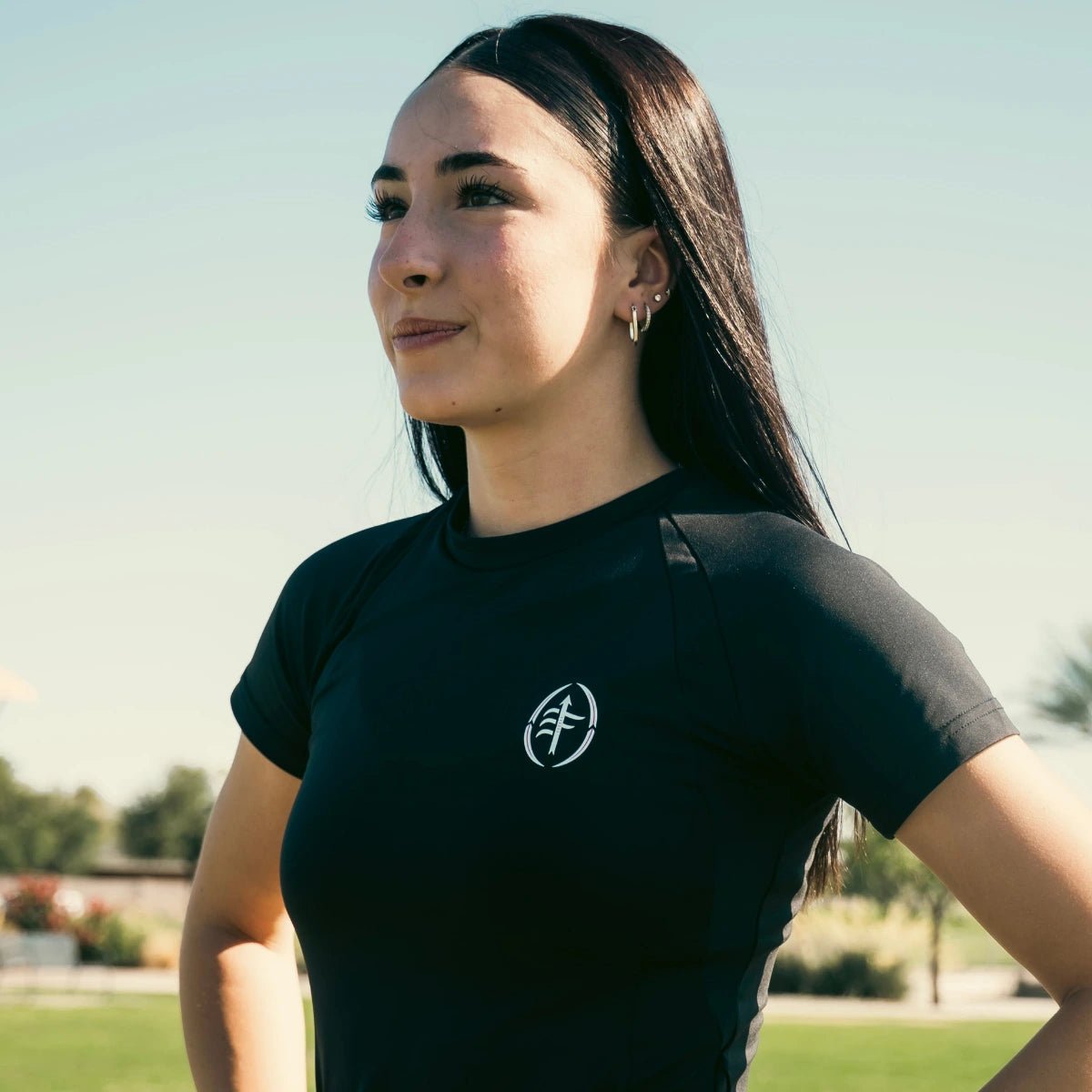
Club season is here. Tournaments are filling up, rosters are locking in, and the question every flag football player is asking right now is the same one it always is before the season starts: what am I wearing?
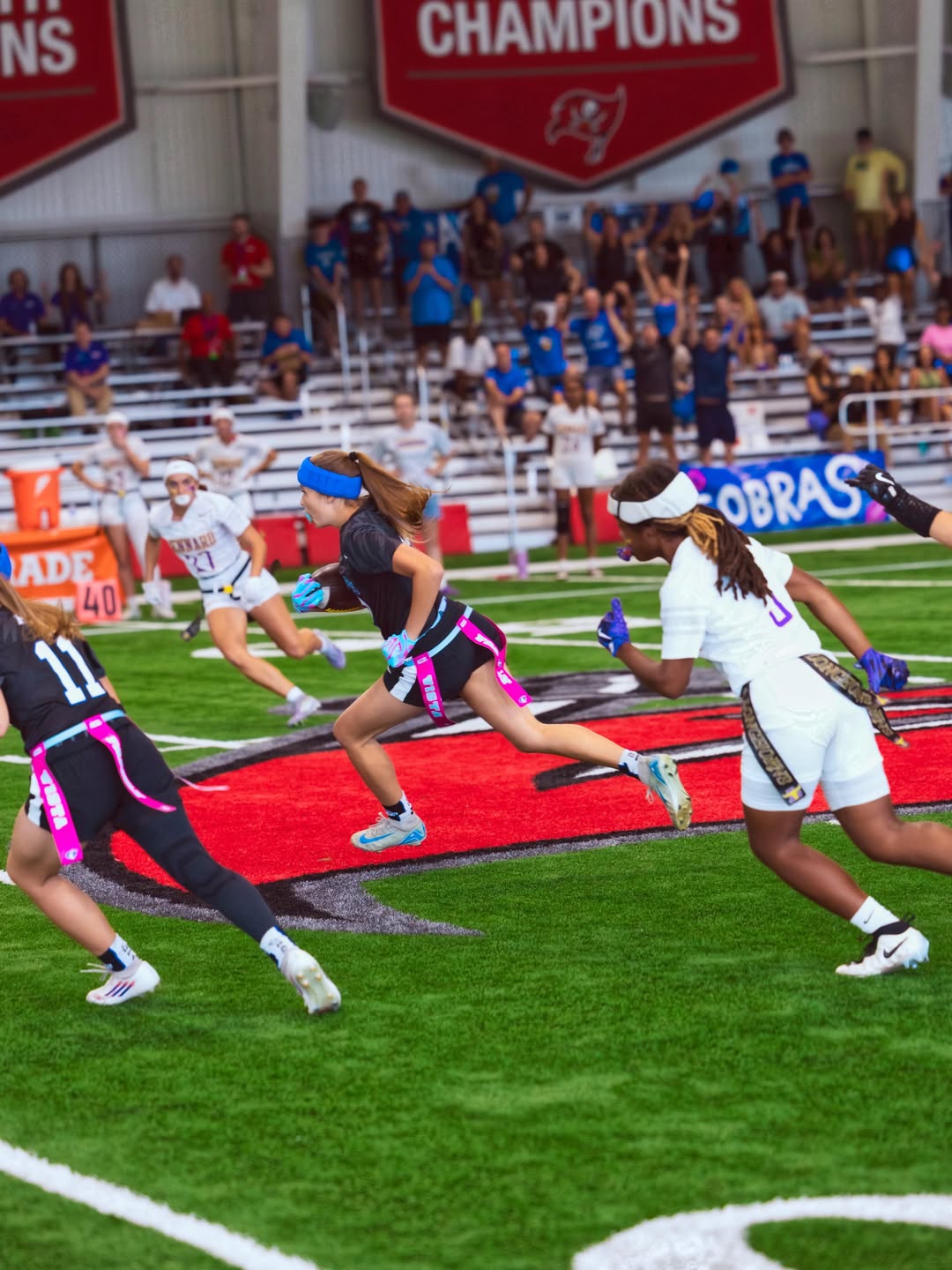
If you’ve ever watched a flag football game and noticed players wearing a tight sleeve on just one leg, you already know what’s trending. The compression pants flag football athletes rely on have evolved — and the single-leg cut is no accident. It’s a deliberate performance choice that’s taken over sidelines from youth leagues to college showcases.
This post breaks down exactly why single-leg compression pants have become the go-to for serious flag football athletes, what to look for when choosing a pair, and how the right gear can actually affect your game — and how you’re seen on the field.

What Are Single-Leg Compression Pants?
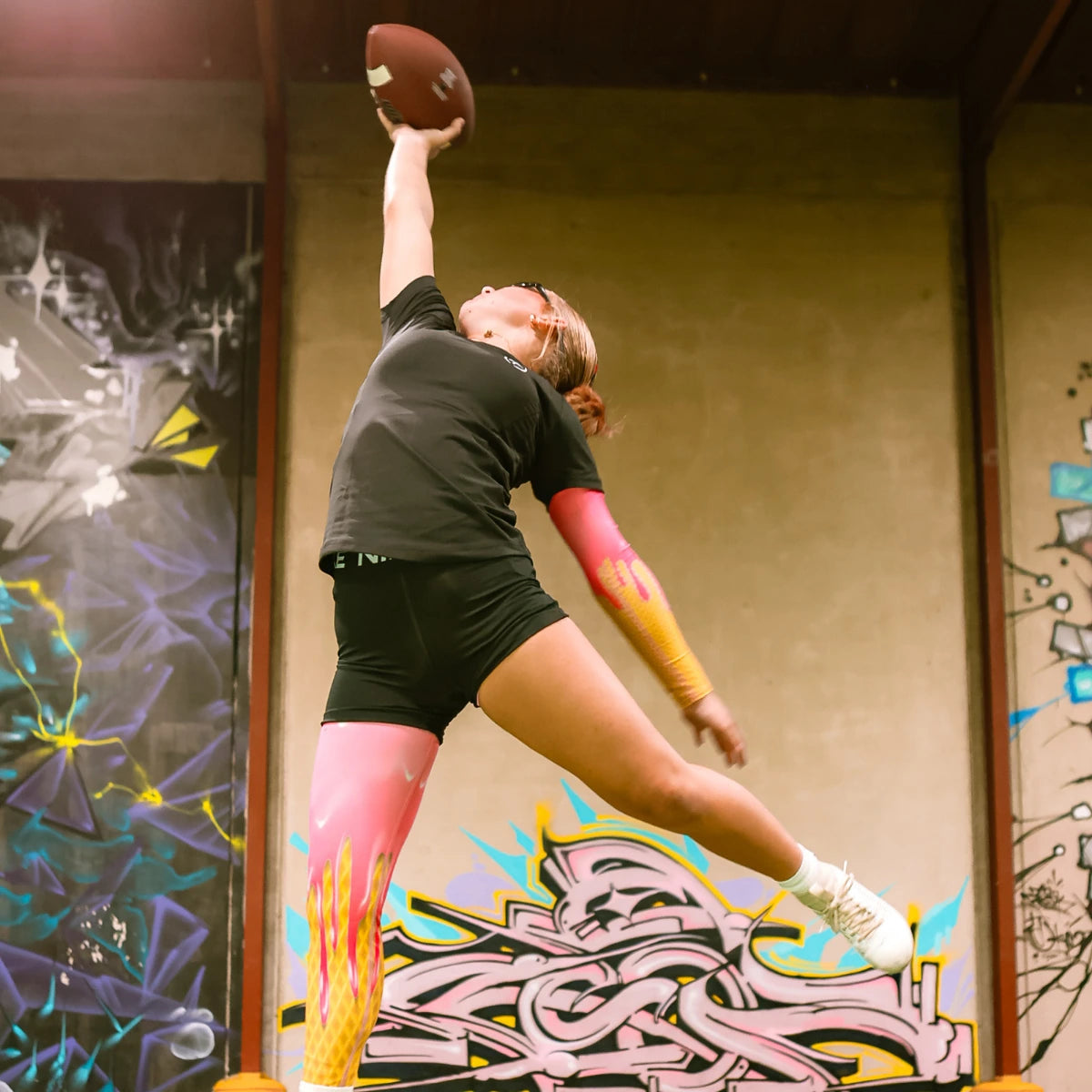
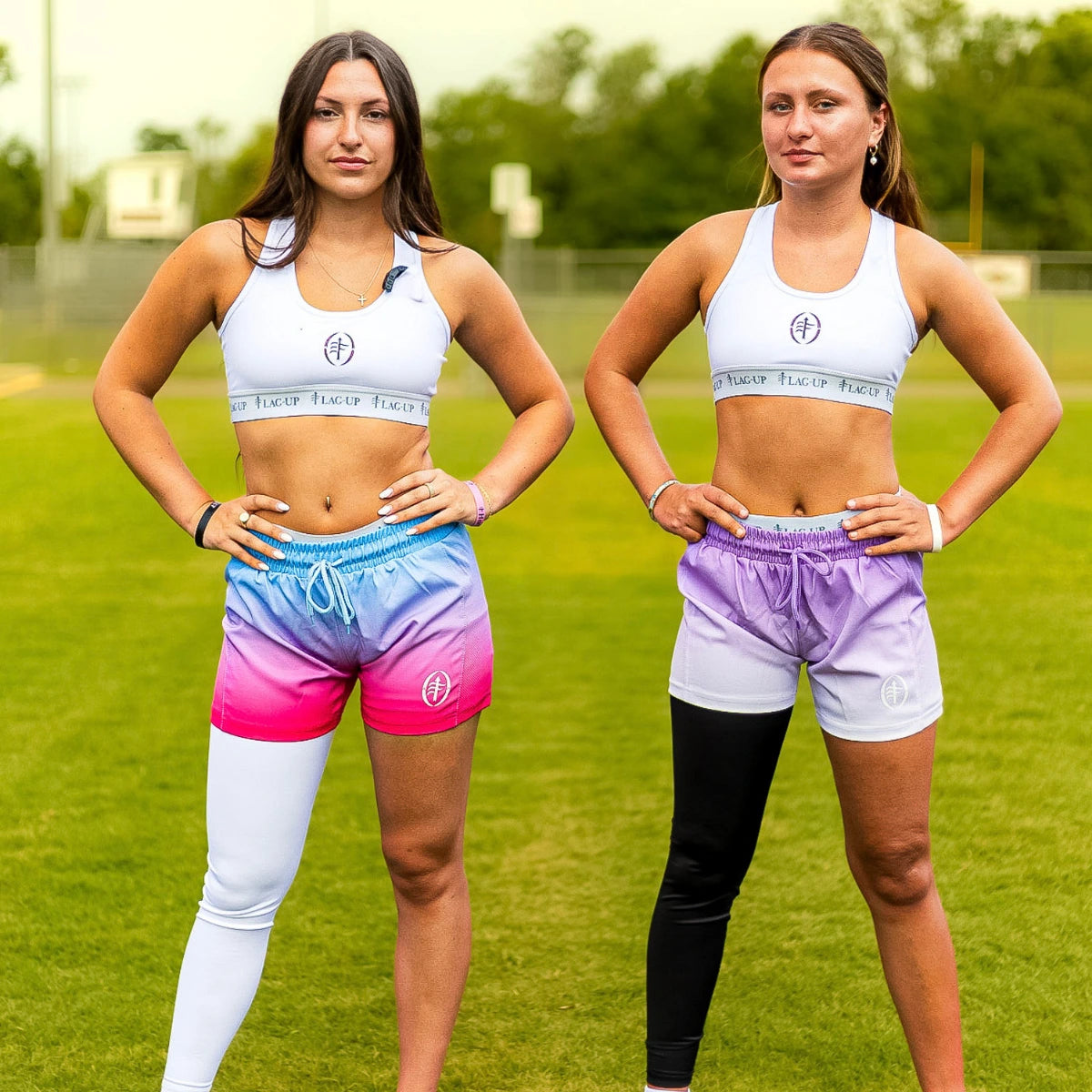
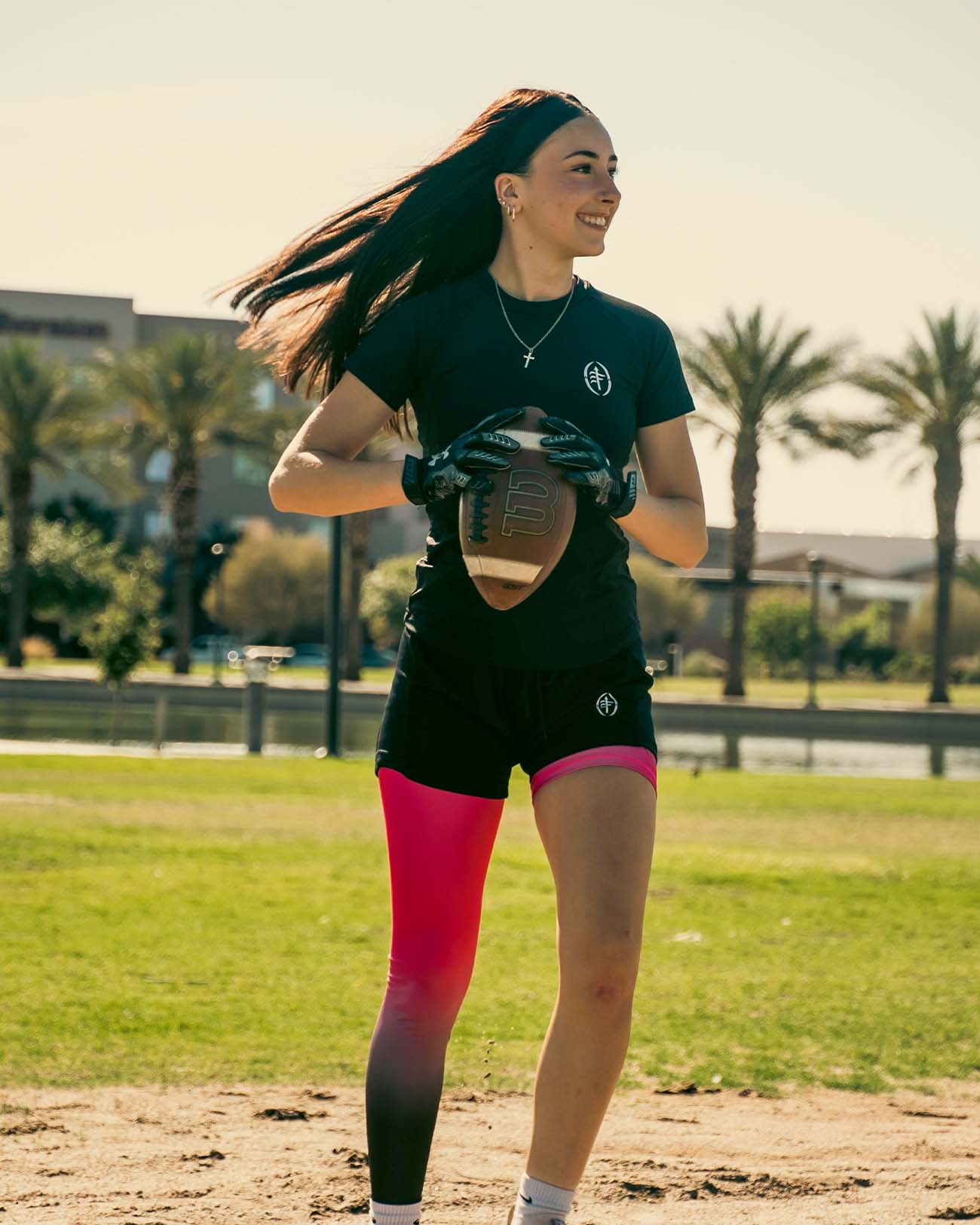
Single-leg compression pants cover one leg — typically from the hip down to just below the knee or mid-calf — while leaving the other leg free. They’re worn under shorts or flag football-specific bottoms and are designed to support the muscles of the dominant or drive leg during explosive athletic movements.
At Flag-Up, we offer two versions:
- Single-leg compression pants — available in solid colors for a clean, versatile look that works with any uniform
- Designer single-leg compression pants — limited-edition prints for players who want to bring personality to their fit
Both are built for the specific demands of flag football: lateral cuts, acceleration, and the constant stop-and-go that defines the sport.
Why Single-Leg Instead of Full Compression Tights?
Full-length compression tights have their place — but single-leg cuts have a few advantages that make them especially popular in flag football specifically.
Freedom of Movement
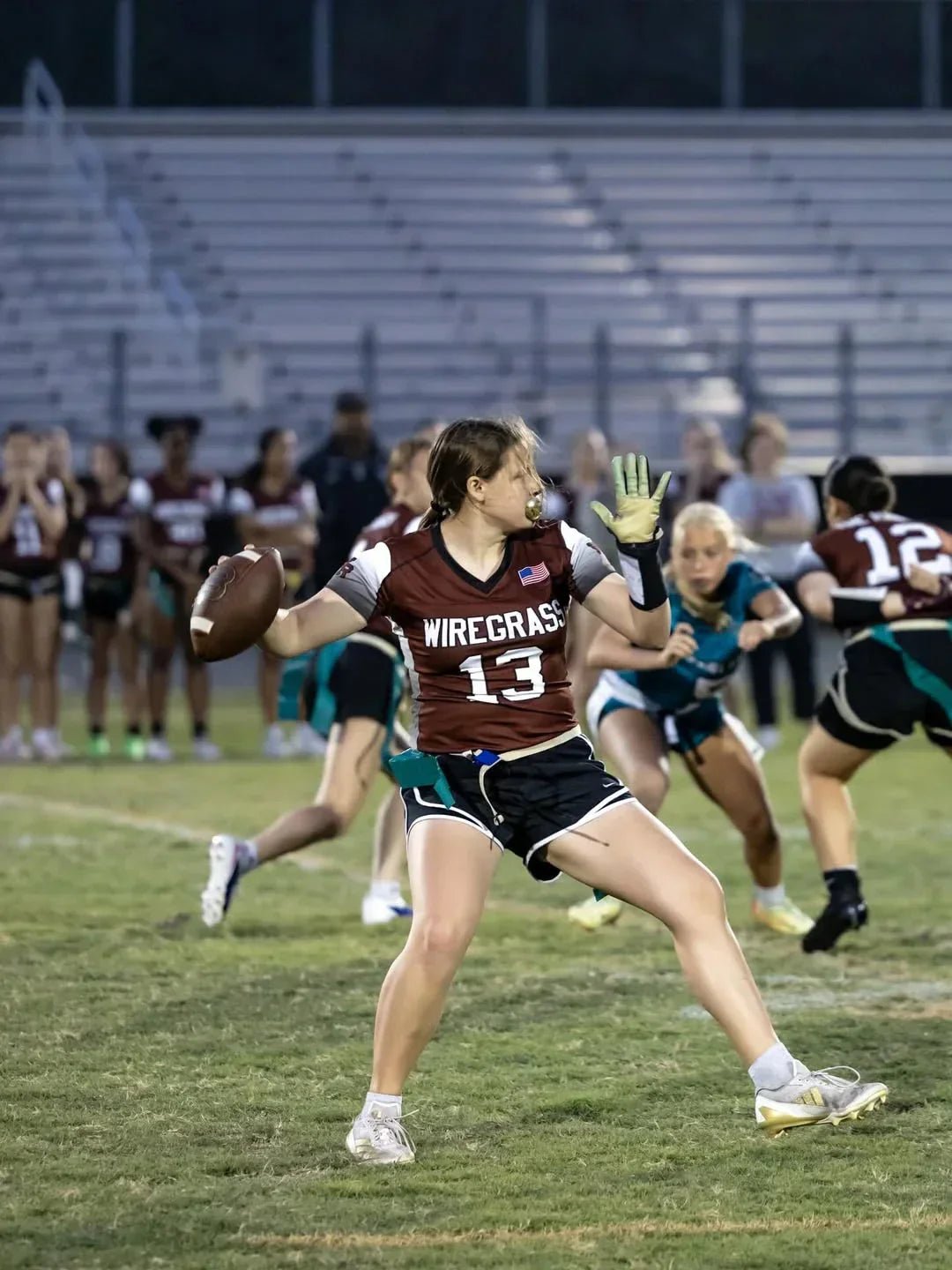
Flag football is a non-contact sport, but it’s far from low-intensity. Route runners, quarterbacks, and defensive backs are constantly changing direction at full speed. A single-leg cut keeps compression where it matters — on the primary drive/slide leg — without restricting the other leg’s range of motion.
Temperature Management
Many flag football leagues play outdoors in warm weather. Full compression tights can trap heat. The single-leg design gives athletes the muscle support and coverage they want without overheating — a real advantage in Florida, Texas, and Arizona markets where outdoor play runs most of the year.
The Visual Edge
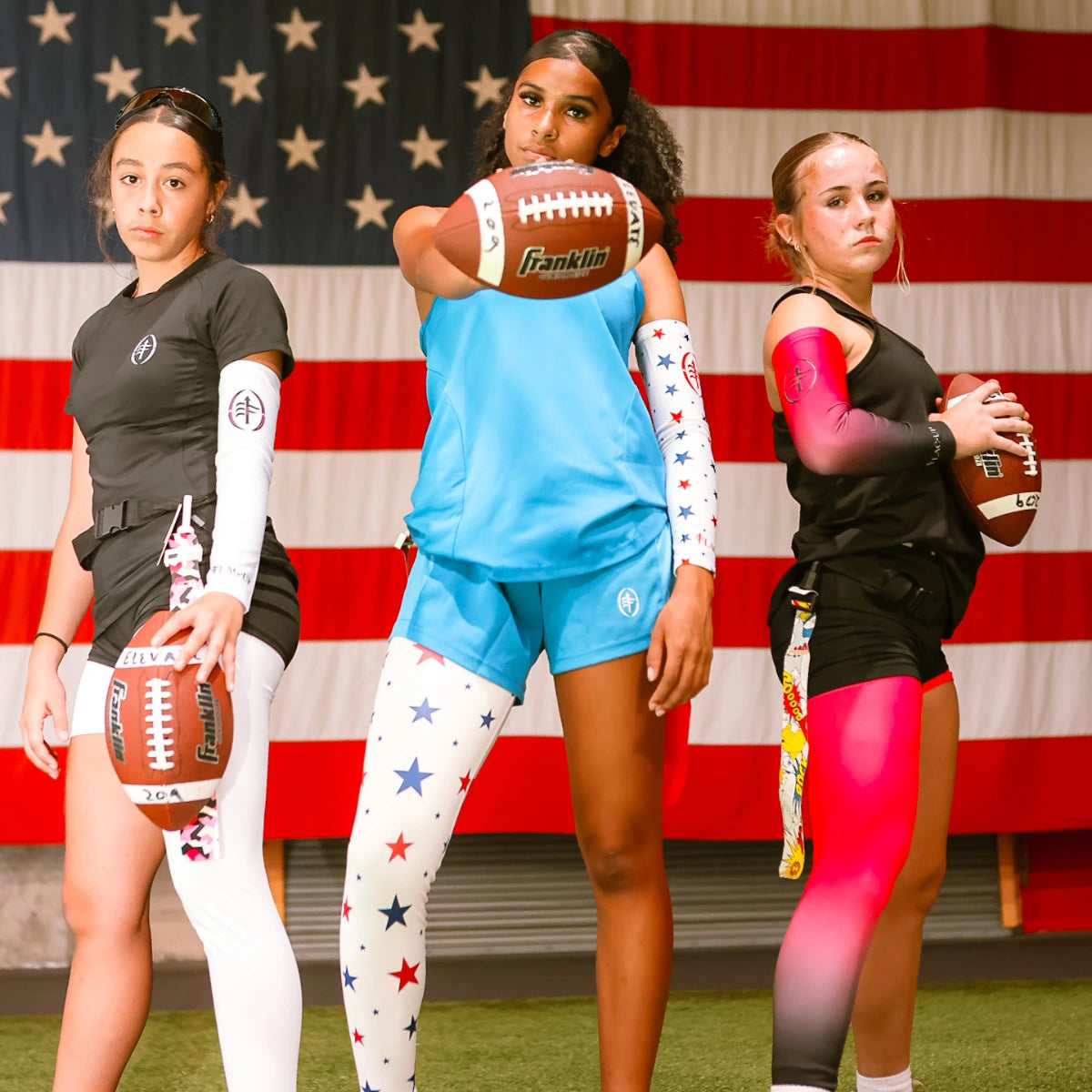
There’s also an aesthetic element that matters to players. The single-leg silhouette has become a signature look in women’s and girls’ flag football. It reads as serious and intentional — and when you’re wearing a limited-edition designer print, it becomes a statement.
Coaches and scouts use gear to identify athletes on a crowded field. They’re not always catching jersey numbers in real time — they’re remembering the girl in the pink flame legging, or the one with the bold print on her drive leg. A distinctive single-leg makes you easier to track, easier to remember, and easier to find when a coach wants to pull you aside after a drill. That’s not vanity — it’s strategy.
“I can’t see what number she’s wearing from across the field — but I can see the pink legging or the neon sleeve.” — Columbia University Football Coach
The Performance Case for Compression
Compression gear isn’t just about looks. The science behind it is straightforward: graduated compression supports the muscle belly and reduces vibration during high-impact movement. For flag football athletes, that translates to a few specific benefits.
Protect your Drive/Slide Leg
On turf, your drive/slide leg takes a beating. Flag-Up’s single-leg compression helps protect that primary contact leg from turf burn, scrapes, and those annoying little wounds that reopen every time an athlete plants, cuts, slides, or hits the ground. With more games being played on turf surfaces, that extra layer matters. It keeps athletes covered, supported, and ready to keep moving without one nagging turf burn becoming the tiny villain of tournament day.
Reduced Muscle Fatigue
During a long tournament day — multiple games, limited recovery time — compression helps muscles stay supported between reps. Less vibration means less micro-fatigue accumulating over the course of a day.
Quad and Hamstring Support on Cuts
The drive leg takes the most load on lateral cuts and route breaks. Single-leg compression applied to that leg keeps the quad and hamstring supported through the full range of the movement — from the plant foot through the push-off.
Warmth and Recovery Between Reps
Compression also helps maintain muscle temperature during breaks in play. Especially in early-season or evening games where temperatures drop, keeping the muscle warm between drives matters for performance and injury prevention.
Which Leg Do You Wear It On?
This is one of the most common questions — and there’s no universal answer. Most athletes wear compression on their dominant or drive leg: the leg they plant and push off from most frequently. For a right-handed quarterback dropping back, that’s often the left leg. For a receiver running routes to the right, it might be the right.
The honest answer is: try it both ways in practice and see what feels more supported. Your body usually knows.
Solid vs. Designer: Pick Your Look for Club Season
If you’re buying for a team or want something that pairs with any uniform, single-leg compression pants in solid colors are the move. They’re clean, professional, and built to last through a full season of weekly games and practices. Solid colors photograph well, pair with everything, and hold up through a full tournament day without fading or losing shape.
If you want to stand out — on a club team, at a showcase, or just because your fit is part of your identity as a player — the designer single-leg compression pants offer limited-edition prints that nobody else on the field is wearing. The splatter print, the flame, the gradient — these aren’t just compression pants, they’re the piece that makes your kit unmistakable. They sell out, so if you see a print you love, grab it.

Match your jersey. If your team wears bright colors, a solid compression in a complementary or neutral tone keeps the look clean. If your jersey is neutral, a designer print gives you a chance to add personality without clashing.
Consider the event. For recruiting camps where you want to look polished and professional, solid is the safer call. For club tournaments where you want to be remembered, designer is the move.
Pairing Your Compression Pants With the Right Gear
Single-leg compression pants work best as part of a complete performance kit. Here’s how to build around them:

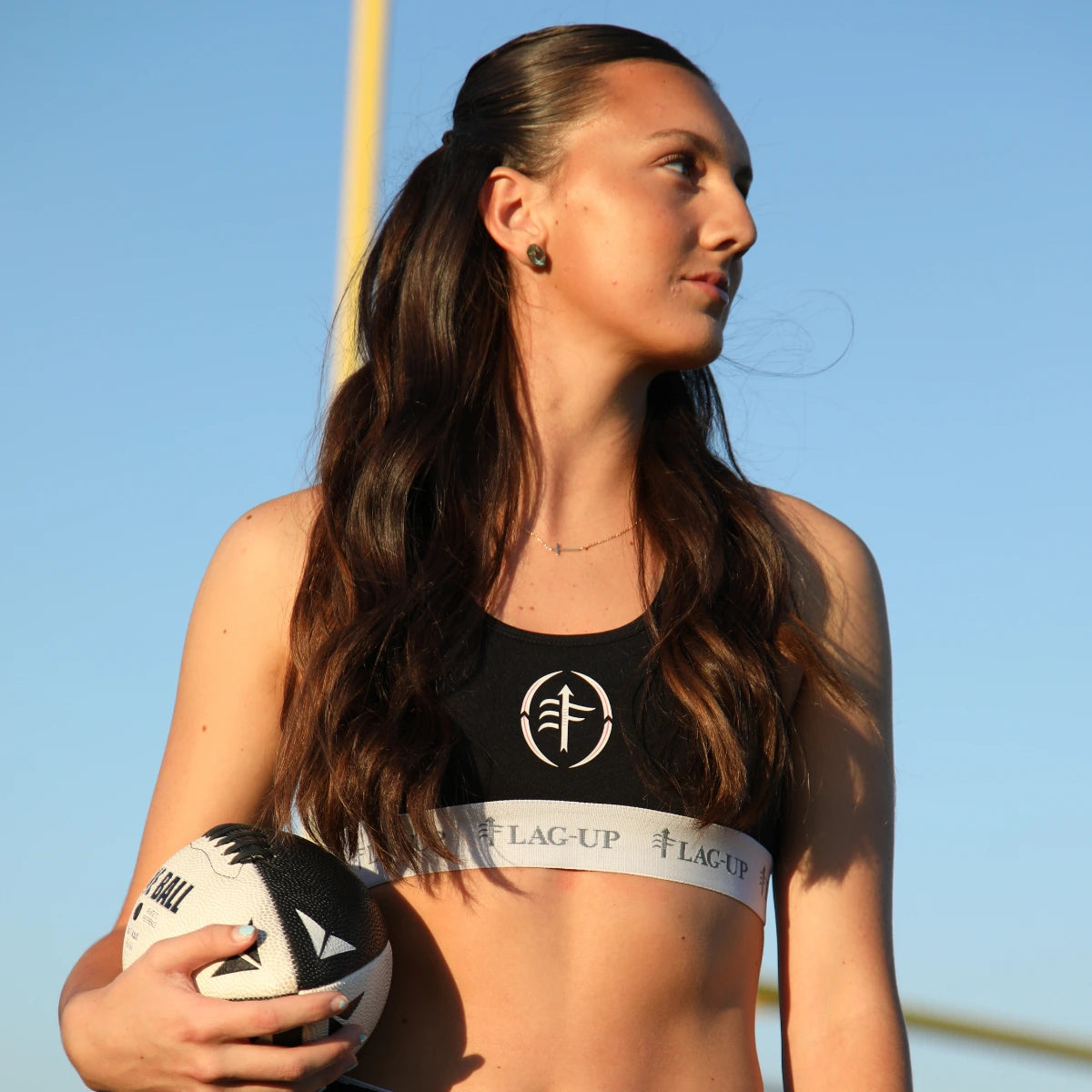
- Sports bra: The MVPocket Bra was built specifically for flag football — it has a built-in pocket for your mouthguard so you’re never setting it on the ground or losing it on the sideline. It pairs perfectly with compression bottoms for a head-to-toe performance look.
- Arm sleeves: Women’s flag football gear at the competitive level almost always includes arm sleeves. They add compression to the throwing or catching arm, protect against turf burn, and keep muscles warm. Find them at flag-up.com/collections/performance-arm-sleeves.
- Mouthguard: Required in most organized leagues. Grab one at flag-up.com/products/mouth-guard and store it in your MVPocket Bra between plays.

Why It Matters
The sport has come a long way — and so has the gear. A few years ago, female flag football players were making do with apparel designed for other sports or for men. That’s changing, and girls flag football apparel is finally catching up to the level these athletes are playing at.
Whether you’re suiting up for a weekend tournament, a recruiting showcase, or just Tuesday night practice, the right compression gear makes a difference — in how you perform, how you recover, and how you feel when you step on the field.
Shop single-leg compression pants — solid colors and limited-edition designer prints — at flag-up.com. Pick your look. Own your season.
Her Game. Her Gear.

1 comment
Noelle
This is very useful information in a sport that’s so hidden on the internet. Even if I don’t buy your compression pants this information will help me make whatever the best choice is. :)
Leave a comment
All comments are moderated before being published.
This site is protected by hCaptcha and the hCaptcha Privacy Policy and Terms of Service apply.